Irrigation system and watermill from the 19th century
The hay meadows of Rörträsk illustrate what agriculture and livestock farming in Norrland might have looked like in the second half of the 19th century. In Rörträsk, it was possible to increase, perhaps even double, the fodder harvest through the artificial irrigation of the natural meadows along the Petikån River.
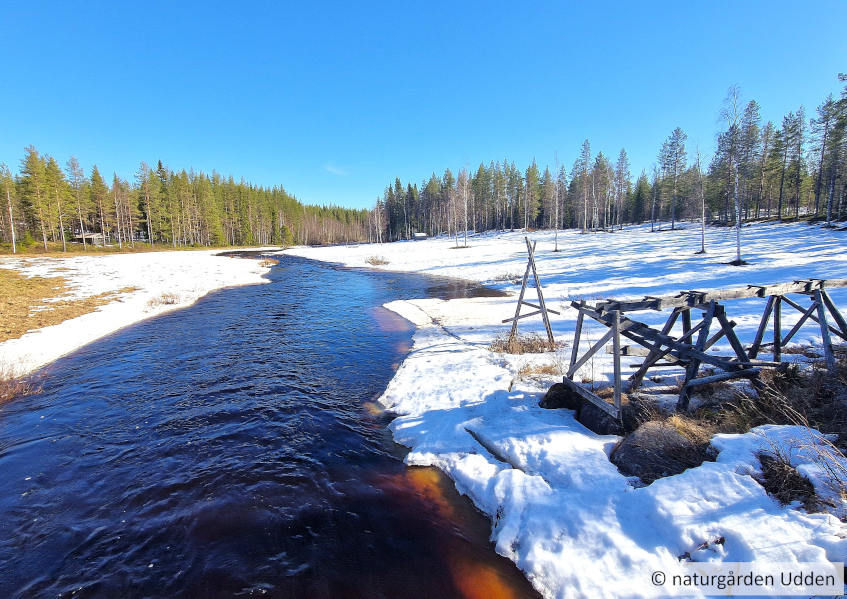
Water was channeled from an adjacent stream to the hay meadows via a long ditch. The water supply from the stream was regulated by small sluice gates, which were opened after the spring floods and closed again a few weeks before the hay harvest. From the main ditch, the water was distributed, filtered, and then spread across the hay meadows via smaller ditches. To irrigate the land on the other side of the Petikån, water was carried across the stream via an aqueduct. The stream water was also used to power a watermill, a millstone, and a planer for producing shingles.